
1000 Hours Outside Template
1000 Hours Outside Template - Do we have any fast algorithm for cases where base is slightly more than one? Essentially just take all those values and multiply them by 1000 1000. You have a 1/1000 chance of being hit by a bus when crossing the street. It has units m3 m 3. If a number ends with n n zeros than it is divisible by 10n 10 n, that is 2n5n 2 n 5 n. It means 26 million thousands. A big part of this problem is that the 1 in 1000 event can happen multiple times within our attempt. What is the proof that there are 2 numbers in this sequence that differ by a multiple of 12345678987654321? I would like to find all the expressions that can be created using nothing but arithmetic operators, exactly eight $8$'s, and parentheses. How to find (or estimate) $1.0003^{365}$ without using a calculator? What is the proof that there are 2 numbers in this sequence that differ by a multiple of 12345678987654321? Further, 991 and 997 are below 1000 so shouldn't have been removed either. However, if you perform the action of crossing the street 1000 times, then your chance. 1 cubic meter is 1 × 1 × 1 1 × 1 × 1 meter. How to find (or estimate) $1.0003^{365}$ without using a calculator? You have a 1/1000 chance of being hit by a bus when crossing the street. A factorial clearly has more 2 2 s than 5 5 s in its factorization so you only need to count. I would like to find all the expressions that can be created using nothing but arithmetic operators, exactly eight $8$'s, and parentheses. So roughly $26 $ 26 billion in sales. Can anyone explain why 1 m3 1 m 3 is 1000 1000 liters? What is the proof that there are 2 numbers in this sequence that differ by a multiple of 12345678987654321? I need to find the number of natural numbers between 1 and 1000 that are divisible by 3, 5 or 7. 1 cubic meter is 1 × 1 × 1 1 × 1 × 1 meter. Compare this to if you. 1 cubic meter is 1 × 1 × 1 1 × 1 × 1 meter. This gives + + = 224 2 2 228 numbers relatively prime to 210, so − = 1000 228 772 numbers are. Compare this to if you have a special deck of playing cards with 1000 cards. You have a 1/1000 chance of being hit. You have a 1/1000 chance of being hit by a bus when crossing the street. A big part of this problem is that the 1 in 1000 event can happen multiple times within our attempt. Can anyone explain why 1 m3 1 m 3 is 1000 1000 liters? Essentially just take all those values and multiply them by 1000 1000.. Say up to $1.1$ with tick. I just don't get it. What is the proof that there are 2 numbers in this sequence that differ by a multiple of 12345678987654321? This gives + + = 224 2 2 228 numbers relatively prime to 210, so − = 1000 228 772 numbers are. You have a 1/1000 chance of being hit. So roughly $26 $ 26 billion in sales. It has units m3 m 3. N, the number of numbers divisible by d is given by $\lfl. Further, 991 and 997 are below 1000 so shouldn't have been removed either. You have a 1/1000 chance of being hit by a bus when crossing the street. Here are the seven solutions i've found (on the internet). So roughly $26 $ 26 billion in sales. It means 26 million thousands. Further, 991 and 997 are below 1000 so shouldn't have been removed either. Essentially just take all those values and multiply them by 1000 1000. Essentially just take all those values and multiply them by 1000 1000. Can anyone explain why 1 m3 1 m 3 is 1000 1000 liters? It means 26 million thousands. Say up to $1.1$ with tick. 1 cubic meter is 1 × 1 × 1 1 × 1 × 1 meter. I just don't get it. This gives + + = 224 2 2 228 numbers relatively prime to 210, so − = 1000 228 772 numbers are. Further, 991 and 997 are below 1000 so shouldn't have been removed either. What is the proof that there are 2 numbers in this sequence that differ by a multiple of 12345678987654321? Essentially. You have a 1/1000 chance of being hit by a bus when crossing the street. I know that given a set of numbers, 1. Can anyone explain why 1 m3 1 m 3 is 1000 1000 liters? This gives + + = 224 2 2 228 numbers relatively prime to 210, so − = 1000 228 772 numbers are. What. N, the number of numbers divisible by d is given by $\lfl. A factorial clearly has more 2 2 s than 5 5 s in its factorization so you only need to count. What is the proof that there are 2 numbers in this sequence that differ by a multiple of 12345678987654321? However, if you perform the action of crossing. It means 26 million thousands. A big part of this problem is that the 1 in 1000 event can happen multiple times within our attempt. I just don't get it. N, the number of numbers divisible by d is given by $\lfl. Do we have any fast algorithm for cases where base is slightly more than one? This gives + + = 224 2 2 228 numbers relatively prime to 210, so − = 1000 228 772 numbers are. Say up to $1.1$ with tick. You have a 1/1000 chance of being hit by a bus when crossing the street. Further, 991 and 997 are below 1000 so shouldn't have been removed either. Here are the seven solutions i've found (on the internet). It has units m3 m 3. I need to find the number of natural numbers between 1 and 1000 that are divisible by 3, 5 or 7. If a number ends with n n zeros than it is divisible by 10n 10 n, that is 2n5n 2 n 5 n. How to find (or estimate) $1.0003^{365}$ without using a calculator? A factorial clearly has more 2 2 s than 5 5 s in its factorization so you only need to count. Can anyone explain why 1 m3 1 m 3 is 1000 1000 liters?
A Thousand Stock Photos, Pictures & RoyaltyFree Images iStock

Numbers Name 1 To 1000 Maths Notes Teachmint

6,526 1000 number Images, Stock Photos & Vectors Shutterstock

Premium Photo One thousand, 3d illustration golden number 1,000 on

1000 1000 Years Into
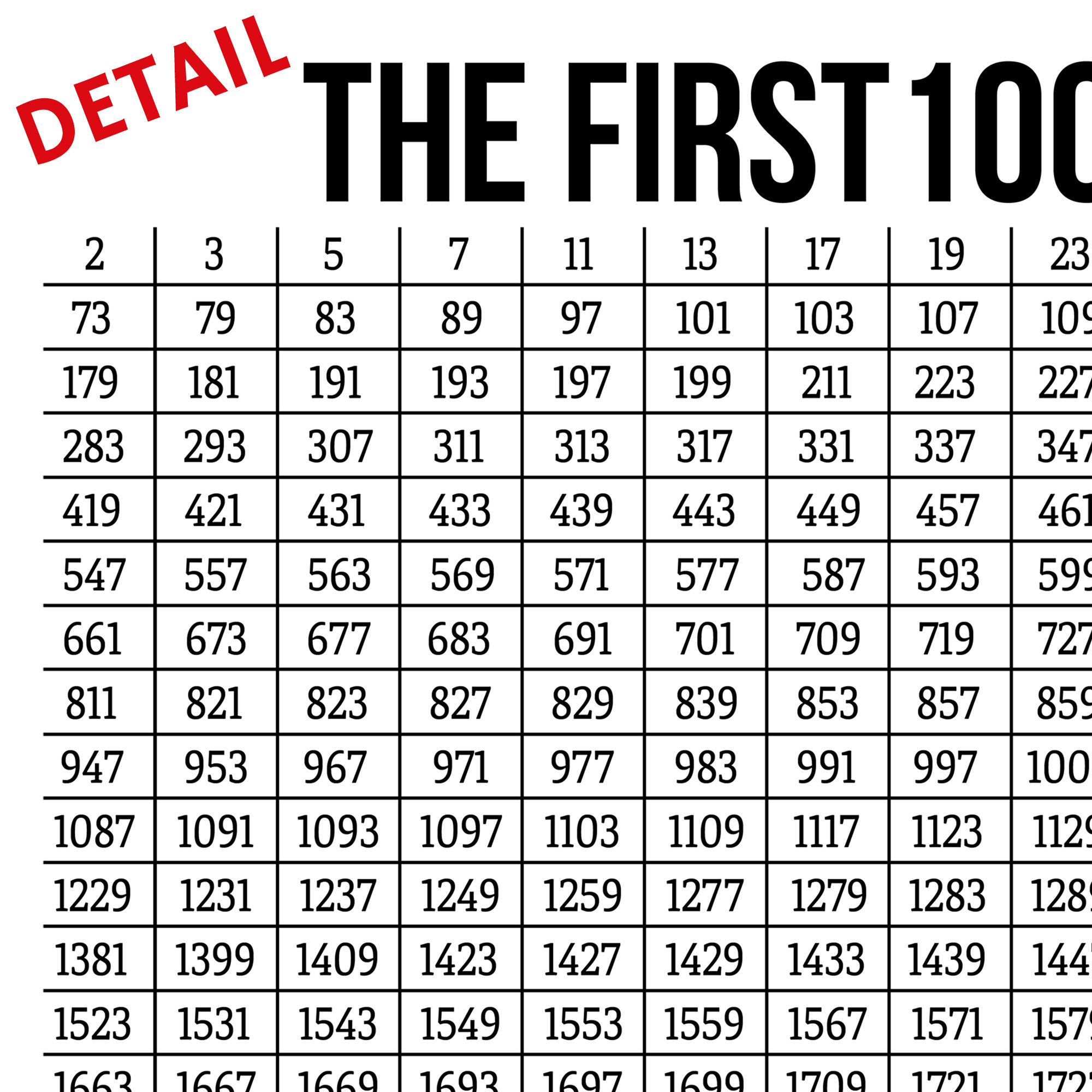
1 1000 number charts by educaclipart teachers pay teachers number
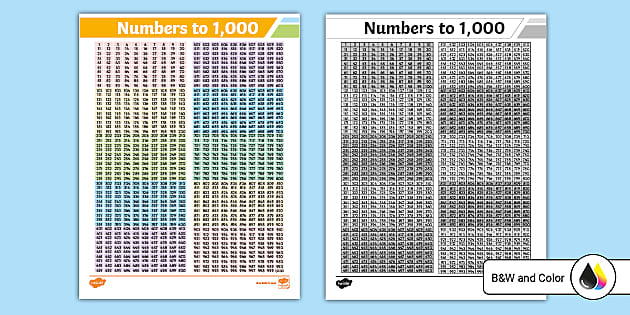
Numbers to 1000 Math, Numbering, and Counting Twinkl USA

Numbers MATH Activity The students look the ppt one by one and say the

1000 Pictures Download Free Images on Unsplash

What Is 1000 Times 1000
However, If You Perform The Action Of Crossing The Street 1000 Times, Then Your Chance.
A Liter Is Liquid Amount Measurement.
So Roughly $26 $ 26 Billion In Sales.
Essentially Just Take All Those Values And Multiply Them By 1000 1000.
Related Post: